My father Harry Charles Neil Maxwell Oulton was born in Dublin on 11 February 1919, to Anglo-Irish parents. Both he and his brother Antony Derek Maxwell Oulton (b. 14 October 1927) attended Matfield Grange prep school near Tunbridge Wells.
The school was run by Charles Perkin (CAP), brother in law of the boys’ maternal uncle Joseph Maxwell. Joe’s wife Dodie ‘remembered dancing with the writer Siegfried Sassoon who lived in a neighbouring village, in the days when the matrons sitting round the floor considered that it was “fast” to reverse in the waltz.’1 Harry sent a postcard to his mother on his arrival in 1926, enthusing about his new environment. ‘School is lovly’ [sic] he wrote, ‘My desk is one of the double ones.’2
In 1935 Derek too went to Matfield Grange.3 His parents brought him over from Egypt, where the family were now living, and he remembered a summer holiday in this year, ‘at a farm house near Canterbury called Paramour Grange, which led to my very moral mother getting startled comments from her friends. It was there, in the little Kent village of Ash, that she bought me my first bicycle’.4
In the same year Uncle Joe took up a post as the Surgical Specialist at RN Hospital Chatham, and the Maxwell boys accordingly went to school with Derek.5 Derek’s holidays were spent largely with these cousins in Kent.
In 1937 Harry was awarded an exhibition to King’s College, Cambridge, meaning that he was not too far away from his younger brother. Derek later recalled, ‘Without him we should never have tried to manufacture gunpowder to unblock a drain, ski-jump our bicycles into the air and buckle their front wheels, or climb the Tower of the Naval Hospital at Chatham and stop the clock, to the great scandal and inconvenience of the whole hospital.’6
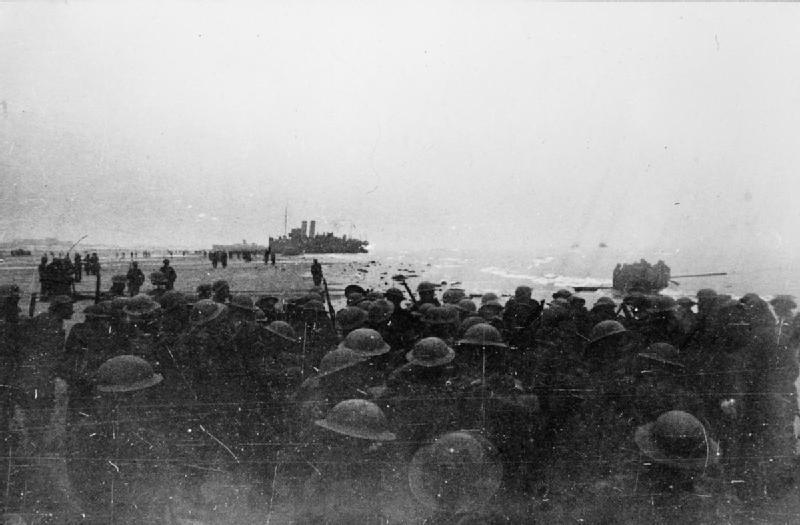
But Harry cut short his university career, joining G Battery (Mercers Troop) RHA in December 1939. He was evacuated from Dunkirk on 1 June 1940, in the destroyer H.M.S. Winchelsea. The ship was bombed twice (once at about 15 yards), landing at Dover7 (where Operation Dynamo was planned). When his train stopped at Paddock Wood, ‘he got a friendly woman handing out tea and buns to ring up the CAPS and say he was safe.’8 Family legend has it that unfortunately he forgot to contact his parents for another week.9 Matfield Grange was hit by a land mine that October. Harry spent the last few years of the war in North Africa with the Desert Rats, where he was awarded an MC and bar. After leaving school, Derek did his two years’ national service as a signalman in the Royal Navy.
Harry’s connection with Kent was briefly revived in 1949, when he bought a Tipsy monoplane and decided to fly it back to the Sudan following a period of leave. As he cheerfully remarked in his account of this trip, The Flying Broomstick, ‘Despite its open cockpit there was no need to wear a helmet, although in England you needed a scarf. …On the minus side it had no tail wheel, only a bamboo, metal-shod skid; and no wireless, lights, luminous instrument gauges, self-starter or brakes. Also, it would be impossible to get spare parts.’10 He had limited flying experience, although one newspaper wrongly assumed that he had been a pilot during the war.
This time Harry did remember to write to his father, ‘in Arabic, so that my mother should learn nothing of it until I had arrived safely in Khartoum. … In due course, my father wrote back, thanking me for not telling my mother but reminding me that I was his son also and asking why the plane had cost so little.’11 Take-off from Lympne was delayed on 30 September because ‘I had spent a lot of time at my uncle’s school and made matters worse by returning to drop a toy parachute over it, which was never found.’12 He was also found to have incomplete paperwork. By the time this was resolved it was too late to begin the flight, and he accordingly spent the night at the Lympne Country Club, setting off the next morning.13
The Sudan Star ran a front-page article on the trip after Harry’s successful arrival in what it described as ‘probably the lowest powered aircraft ever to make the trip.’14 In 1962 the magazine Popular Flying ran 2 instalments of The Flying Broomstick, but discontinued the series after coming ‘under a certain amount of fire from the Ministry of Aviation regarding one or two unfortunate incidents’.15
Derek went on to take a double first in Law from King’s College, Cambridge. He was called to the bar in 1952 and joined the Lord Chancellor’s Office in 1960. He was described after his death in 2016 as ‘one of the greatest civil servants of his generation.’16
Neither of the brothers lived in Kent again, although my mother tells me that Harry talked about retiring here. On my visits to Chatham Dockyard, I always make a point of checking the clock.
Bibliography
‘3,930 Adventurous Miles by Midget Plane. S. G. Official’s 50 Landings on Sudan Flight.’ Sudan Star. 2 November 1949. 1.
Author unknown. ‘Force landed his way to the Sudan in “Tipsy” plane.’ Unidentified newspaper clipping. Khartoum. November [1949].
‘Desert Rats’
The evacuation from Dunkirk and the processing of the returned soldiers. [Includes footage of HMS Winchelsea]. IWM (ADM 417).
Goodall, Robert to Derek Oulton. 23 May 1963. Family archive.
Legg, Thomas. ‘Oulton, Sir (Antony) Derek Maxwell (1927–2016), civil servant.’ Oxford Dictionary of National Biography. 9 January 2020. Oxford University Press.
‘Maxwell, Surgeon Rear-Adm. Joseph Archibald, (1890–12 July 1980).’ Who’s Who and Who Was Who. Oxford: University Press, 1 December 2007.
Oulton, Derek. From Digger to Poops. Privately printed memoir.
–. HCO. 1979. Privately printed memoir.
Oulton, Harry. To Elsie Oulton. Postcard marked 23 September 1926.
–. The Flying Broomstick. HCO 24-95.
References
From Digger to Poops 37. ↩︎
Harry Oulton to Elsie Oulton. ↩︎
From Digger to Poops 17. ↩︎
From Digger to Poops 45-6. ↩︎
In 1955 Uncle Joe would retire from St Mary’s Hospital, Portsmouth, as Surgeon Rear Admiral. Which was itself one in the eye for his own head teacher, who had once written on his school report that ‘A little bird that can sing, and won’t sing, must be made to sing.’From Digger to Poops 36. ↩︎
HCO 2. ↩︎
With thanks to Jon Iveson of Dover Museum and the Ministry of Defence. Additional research by Nicholas Oulton. ↩︎
From Digger to Poops 47 ↩︎
It is worth remembering that the woman being asked this favour was a stranger – local phone calls would have been considerably cheaper than long distance, let alone overseas to Harry’s parents. ↩︎
The Flying Broomstick 25. ↩︎
The Flying Broomstick 26. ↩︎
The Flying Broomstick 30. ↩︎
The Flying Broomstick 30. ↩︎
Cited HCO 23. ↩︎
Robert Goodall (Managing Editor of Popular Flying) to Derek Oulton. ↩︎
Legg, Thomas. ‘Oulton, Sir (Antony) Derek Maxwell (1927–2016), civil servant.’ ↩︎