
Angela Burdett-Coutts, 1814-1906
In this visual essay, Professor Carolyn Oulton traces the Kent visits and interactions with Charles Dickens et al of heiress and philanthropist Angela Burdett-Coutts.
In this visual essay, Professor Carolyn Oulton traces the Kent visits and interactions with Charles Dickens et al of heiress and philanthropist Angela Burdett-Coutts.
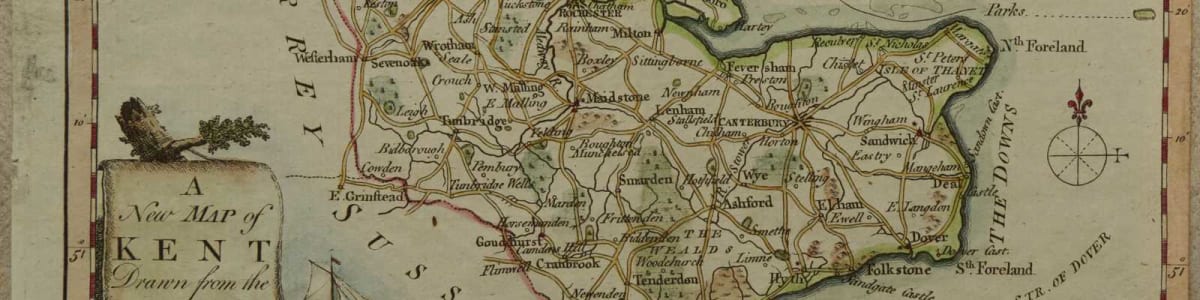
Ann Radcliffe’s 1797 journey through Kent recasts familiar towns and river landscapes in the heightened language of Gothic and Romantic description. Journal extracts trace her route from Gravesend and Rochester to Canterbury and the coast, showing how lived travel and literary style combine to shape place. The posthumous publication of these notes also clarifies her later-life retreat from authorship and the thin biographical record around her.
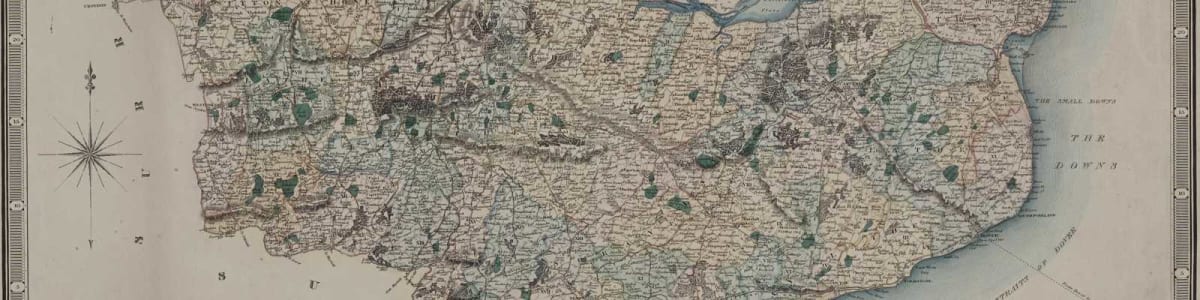
Israel Zangwill’s holidays and working visits to the Kent coast shaped his sharp-edged observations of seaside towns and their leisure cultures. Ramsgate, Margate, Broadstairs, and Dover appear through his journalism and letters as places where modern tourism, class display, and Jewish public identity intersect.
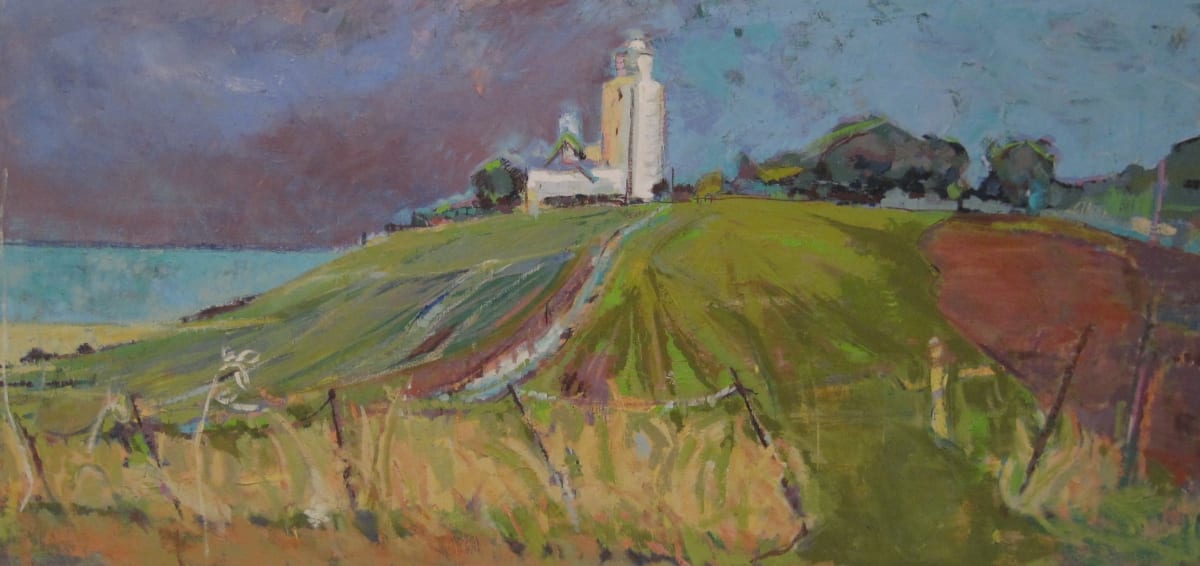
Simone Blandford discusses the Kent childhood experience and influence of the author Ursula Askham Fanthorpe.

The destruction of World War II came to Canterbury in the night of 1 June 1942, the worst of a series of air raids, when high explosive and incendiary bombs rained down on the old city.

University expansion reshaped Canterbury in the late 20th century, as new campuses and student housing transformed the city’s edge and internal streetscape. The University of Kent, Canterbury Christ Church University, and the University for the Creative Arts grew through distinctive building programmes and institutional mergers while linking local heritage to modern higher education.
Out-of-town trading estates along Canterbury’s A28 corridor reshaped the city’s retail geography from the 1960s onward, concentrating big-box stores and services at Wincheap and Sturry Road. Supermarkets, retail parks, and park-and-ride access boosted regional shopping but intensified traffic tailbacks, pollution, and vibration damage to older roadside housing and buildings.
Powell and Pressburger’s 1944 film A Canterbury Tale reworks Chaucer’s pilgrims to frame wartime Canterbury as a place where physical travel and spiritual inheritance meet. Blitz-era threats to historic buildings sharpen the film’s focus on intangible literary heritage and collective memory, later echoed by the installation of a Chaucer statue that links medieval pilgrimage to modern tourism on Canterbury High Street.
Department stores and specialist retailers reshaped Canterbury’s city centre from the 1920s to the early 21st century, linking consumer culture to postwar rebuilding and changing streetscapes. Lefevre’s, Barretts, and later Whitefriars show how bombing damage, planning choices, and heritage-minded conservation together made retail both an engine of urban renewal and a contested civic priority.
Canterbury’s railway corridor links early steam innovation to late-20th-century heritage-led regeneration. Listed buildings at Canterbury West and the rescued Goods Shed show how preservation orders and adaptive reuse reshaped a former goods yard into housing, markets, and high-speed connectivity.
Post-war redevelopment in Canterbury city centre sparked a struggle between Charles Holden’s modernist master plan and a resident-led defence of historic streets and spaces. Compromise schemes, partial implementation, and later rebuilding produced a layered townscape where bomb damage, traffic planning, retail redevelopment, and pedestrianisation reshaped places such as Rose Lane, the Longmarket, and Whitefriars.
Twentieth-century Canterbury reshaped its historic core after World War II bombing while expanding outward with housing, education, retail, and tourism. Postwar rebuilding, new universities, and suburban development turned a small cathedral city into a fast-growing regional centre, even as traffic and pollution became persistent urban challenges.