M. E. Braddon (1835-1915)
Carolyn Oulton considers the Kent visits of actress and author Mary E Braddon and her family and their influence on her writing.

Carolyn Oulton considers the Kent visits of actress and author Mary E Braddon and her family and their influence on her writing.

Ellen Terry’s funeral in July 1928 turned Smallhythe Place, the lanes to the local church, and the town of Tenterden into a national stage shaped by press intrusion, crowds, and ritual mourning. Eyewitness accounts trace how motor cars, police, photographers, and rural workers with their tools marked the passage from private deathbed to public commemoration and final journey to London.

Dame Ellen Terry’s Victorian celebrity and Shakespearean stage work shaped modern ideas of performance and theatrical professionalism. Her later life at Smallhythe Place near Tenterden links a London-centred career to the Kent marshland landscape through family networks, correspondence, and the making of a lasting memorial site.

Christopher Marie St John shaped early 20th-century British letters through suffrage writing, experimental life writing, and decades of journalism linked to modernist and late-Victorian literary cultures. Smallhythe Place in Kent anchors her personal and creative network with Edith Craig, Ellen Terry, and a circle of theatrical, artistic, and queer friends, and it surfaces across her autobiography and biographical works.

Diana and Antoinette Powell-Cotton left Quex Park in Birchington in 1936 to drive a heavily laden truck through Angola and film village life, producing some of the earliest British women-led documentary work. Their field notes and ethnographic practice show how gendered labour, logistics, and close relationships with local women shaped both the footage and the anthropology in harsh 1930s interior conditions.
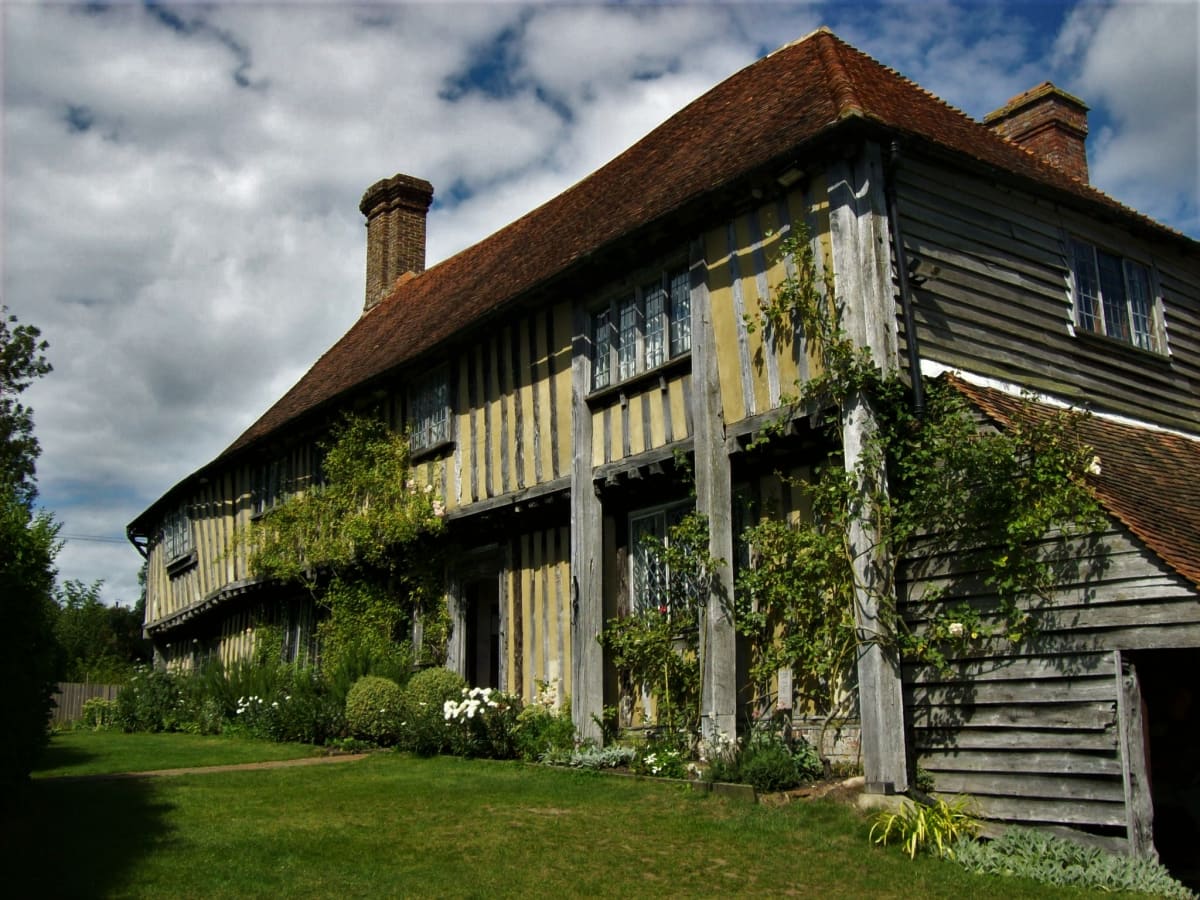
Cicely Hamilton’s feminist writing and stage work helped turn women’s suffrage into popular theatre, linking propaganda plays, pageants, and anthem lyrics to political organizing. Her long stays at Smallhythe Place in Kent connected her to Edy Craig, Christopher St John, and Clare Atwood while the site’s remoteness shaped her activism, friendships, and growing doubts about campaign discipline in the 1930s.

Edith Edy Craig shaped early 20th-century British theatre through directing, producing, costume work, and the Pioneer Players’ commitment to drama that tackled social and political questions. Her life links London and Smallhythe Place in Kent, where she built a museum and Barn Theatre to sustain Ellen Terry’s legacy while pursuing feminist and suffrage activism alongside Christopher St John and Claire Atwood.

Professor Carolyn Oulton explores the life of feminist writer Sarah Grand (born Frances Clarke) especially her time in Kent.

G. W. M. Reynolds’s life and writing connect a chain of Kent places from Sandwich and Ashford to Herne Bay, with Canterbury and Dover serving as vivid stages for his journalism and fiction. Mary Price uses coaches, inns, streets, and Shakespeare Cliff to shift the novel’s emotional centre back to Kent while exposing a landscape shaped as much by violence and crime as by leisure and tourism.

Jerome K. Jerome’s comic writing ties Folkestone’s Leas and seasonal seaside respectability to anxieties about leisure, marriage, and money in late Victorian Britain. Scenes from Three Men on the Bummel use the town and its promenades to stage satire about tourism, bicycles, and self-confident amateur expertise.

H. G. Wells’s move to Sandgate and Hythe reshaped his literary life and anchored several key novels in Kent’s coastal towns. Places such as Beach Cottage, Arnold House, and Spade House connect local geography, author networks, and the social mobility themes in The Sea Lady, Kipps, and The History of Mr. Polly.

T.S. Eliot’s recovery stay in Margate in 1921 shaped the drafting of The Fire Sermon and anchors a key moment in The Waste Land. The Nayland Rock Promenade Shelter and the Margate seafront connect a specific Kent location to modernist poetics of post-war dislocation, where landscape and mind collapse into the poem’s stark image of inability to connect experience.