Seaside resorts
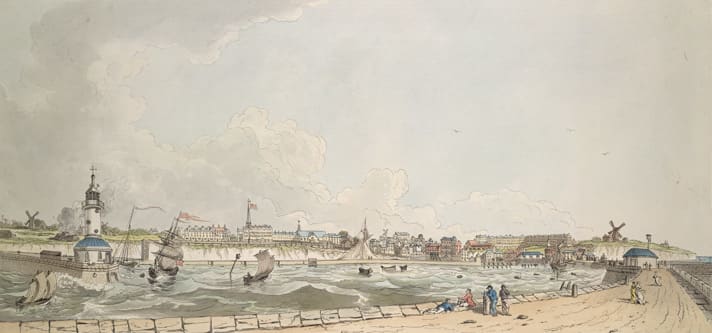
Prof. Carolyn Oulton traces the begins of seaside holidays from their inland spa town origins and explores the health benefits are variable etiquettes of sea bathing.

Prof. Carolyn Oulton traces the begins of seaside holidays from their inland spa town origins and explores the health benefits are variable etiquettes of sea bathing.

Theatre and popular entertainment in Canterbury evolve from Roman amphitheatres to postwar venues, revealing how performance traditions persist through religious bans, civil war shutdowns, and changing licensing laws. Local inns, guildhalls, music halls, and purpose-built theatres anchor a civic culture that links touring companies with figures such as Marlowe, Aphra Behn, Dickens, and Ellen Terry.

Tunbridge Wells emerges in Jane Austen’s fiction as a marker of fashionable spa culture and London society’s leisure geography, shaping comparisons with Bath, the country, and the Sussex coast. References across Northanger Abbey, Mansfield Park, Persuasion, Sanditon, and Emma connect the town’s social scene to its souvenir trade, including Tunbridge ware as a comic prop that exposes romantic illusion and status anxiety.

Jane Austen’s 1788 visit to the Red House in Sevenoaks reveals how family patronage and elite sociability shaped her early encounters with wealth and status. The uneasy dinner she attended there echoes in Mansfield Park, where Fanny Price seeks refuge in silence amid demanding drawing-room interactions.

Regency Ramsgate emerges as both a fashionable seaside destination and a morally suspect setting in Jane Austen’s life and fiction. Visits connected to the Austen family’s naval ties and local acquaintances sit alongside Ramsgate’s narrative role in Pride and Prejudice and Mansfield Park as a stage for seduction, excess, and dubious male behaviour.

Jane Austen’s stays at Godmersham Park reveal how East Kent wealth, sociability, and a well-stocked country-house library shaped her daily life and writing routines. Letters from 1813 contrast freedom from household economies with intense reading and observational pleasure in the estate’s rooms and local visiting circuits.

Jane Austen’s visits to Chilham Castle reveal how dinner parties and balls shaped her social world in Kent between 1796 and 1813. Letters to Cassandra Austen turn the castle’s gatherings into lively commentary on friendship, flirtation, and the comforts of moving into a chaperone role.

Jane Austen’s repeated visits to Canterbury reveal how family networks and urban sociability shaped her experiences and fed into her fiction. Cathedral precinct calls, shopping, concerts and race-week balls sit alongside the stark tour of Canterbury gaol in 1813, linking leisure, civic life, and carceral space to her letters and novels.
Women’s suffrage activism in Dover gathered momentum through public lectures, crowded meetings, and performances staged in venues such as the Apollonian Hall, Wellington Hall, and the Maison Dieu. Local campaigns and visiting speakers linked civic politics, policing, and popular theatre to a widening movement that culminated in women’s enfranchisement in 1918 and full equality in 1928.

William Pett Ridge’s Kent childhood in Chilham, Marden, and Paddock Wood shaped a writer who later chronicled London cockney life while keeping rural railways, hop-picking, and cricket in view. Railway work, self-education, and literary networks linked him to figures such as Charles Dickens, H.G. Wells, and Jerome K. Jerome as he moved from periodical sketches to prolific novel-writing. Vignettes from novels like Erb and Table d’hote show how Kent’s transport and seasonal work became narrative material even as his reputation faded after his death in 1930.

Walter James, Fourth Lord Northbourne, shaped twentieth-century agriculture by coining the term organic farming in Look to the Land (1940) and linking soil health to national resilience. Work at the Betteshanger estate near Deal, biodynamic networks, and wartime food policy in Kent reveal the tensions between ecological principles and pressure for maximum production.
Keith Douglas links Tunbridge Wells to the literary record of the Second World War through poems and the memoir Alamein to Zem Zem. His disrupted childhood, education at Christ's Hospital and Oxford, and rapid path into armoured warfare frame a short career cut off in Normandy in 1944.