
Mary Ann/ Marian Evans [pseud. George Eliot] (1819 –1880)
Michelle Crowther describes the 1850s Kent holidays of the author Mary Ann/Marian Evans better known by her pseudonym, George Eliot.
Michelle Crowther describes the 1850s Kent holidays of the author Mary Ann/Marian Evans better known by her pseudonym, George Eliot.

Peter Firmin was best known as co-creator of children’s television programmes including Ivor the Engine, Clangers and Bagpuss. The Winter Diary of a Country Rat is testament to the importance of stories in shaping our relationship to locality.

A Memorial, situated on the white cliffs at Capel-le-Ferne near Folkestone, commemorates the Battle of Britain.

Brooke’s re-imaginings, drawing on local folklore and visionary landscapes of promise and loss, lend national significance to the area around Bishopsbourne.

Amber Potter traces the life of early 16th century prophetess Elizabeth Barton: the Maid of Kent.
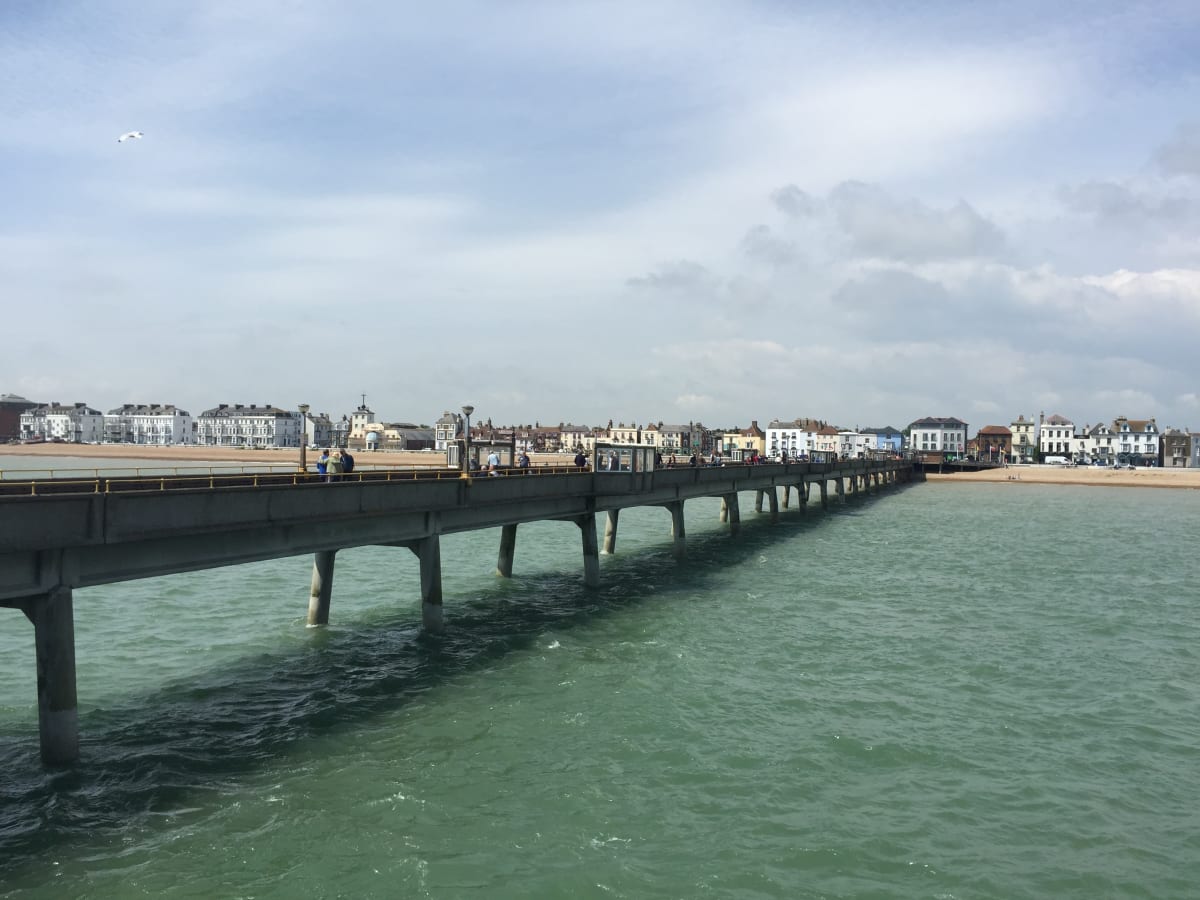
Deal seafront and pier become a shifting register of tide, weather, and light, observed from a quiet window that turns the coast into a series of framed panels. Maritime traffic, Goodwin Sands, and distant French lights punctuate the scene and sharpen the poem’s attention to pattern, colour, and motion along the Channel edge.

Coward first Dymchurch in1922. He spent at least part of his time in Kent for the next 27 years.

Churchill is reputed to have said that a day away from his home in Kent was a day wasted. There are three statues of the wartime Prime Minister across the county.

Edward Linley Sambourne’s career as a Punch cartoonist intersects with Kent’s seaside resorts through holidays, friendships, and public events in Thanet, Ramsgate, Margate, Dover, and Folkestone. Diaries, travel details, and photographic practice reveal how railway mobility and leisure landscapes fed his satirical work while also exposing a troubling pattern of voyeuristic image-making.

Michelle Crowther traces the life and work of historical fiction writer Nora Geraldine Gordon Salmon (pseudonym J.G. Sarasin).
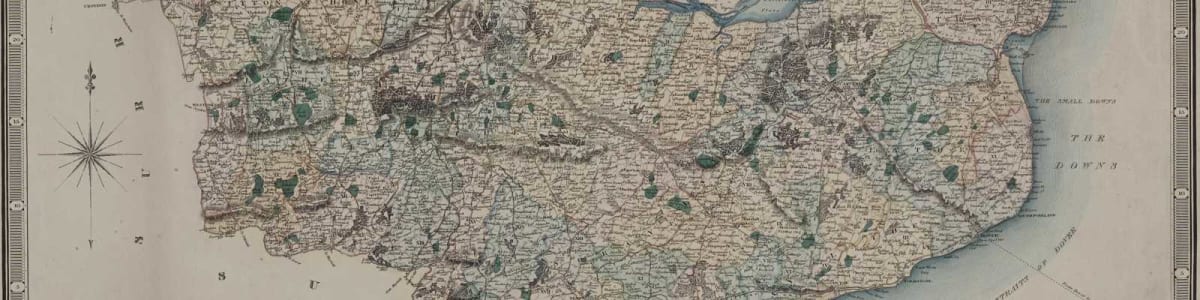
Mary Cowden Clarke’s autobiographical memories trace how Kent shaped a Shakespeare scholar’s sensibility through travel mishaps, seaside journeys, and rural pleasures. Episodes from Margate, Dover, Tonbridge, and Ramsgate link nineteenth-century mobility, food, and landscape to literary networks around Keats, Coleridge, Dickens, and the Novello circle.

The Great Storm of 1987 was the worst to hit the UK since 1703, with damage including the destruction of 6 of the famous oaks in Sevenoaks and a high number of deaths.