
Leather Bottle, The Street, Cobham, Gravesend
The Leather Bottle in Cobham is referenced in a number of guides to Kentish Dickens Land, and still houses a wealth of Dickensiana.
The Leather Bottle in Cobham is referenced in a number of guides to Kentish Dickens Land, and still houses a wealth of Dickensiana.
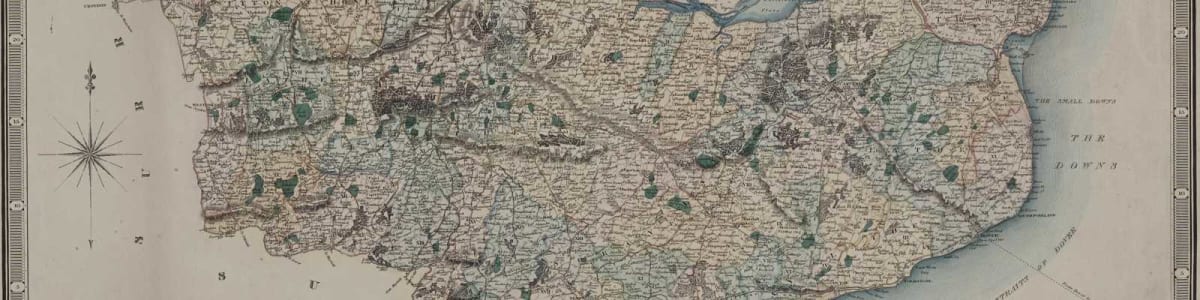
Magwitch’s last hours of freedom before his arrest by Customs officials are spent in an inn called The Ship. This is most likely to be based on the Ship and Lobster in Gravesend, only a few miles away from Cooling churchyard where the story begins.
Restoration House in Rochester is reimagined as the Satis House of Great Expectations. But the Latin 'satis' (enough) is deeply ironic for the protagonists whose lives are overshadowed by this house.
In Great Expectations Pip is 'bound' at the Guildhall to be Joe's apprentice, prefiguring the many instances in the novel where characters are trapped, imprisoned or bound to each other by their shared history.

Pip Pirrip famously wants to be a gentleman. The topography of his childhood world is subtly altered by Dickens to show the choices he makes, and the limits of his agency in the pre-Victorian landscape.
The churchyard of St James’s , Cooling is widely credited with being the place where a terrified Pip first encounters the convict Magwitch. Its exposed location reminds visitors that there is quite literally nowhere to hide.
Eastgate House in Rochester is the setting for Rosa Budd's schooldays in Edwin Drood. Such is the proximity of locations featured in the Rochester novels, it is possible to imagine Rosa looking onto the High Street at the spot where Pip is humiliated by a butcher's boy in Great Expectations.
Dickens famously wrote the last words of his unfinished novel, The Mystery of Edwin Drood, in the Swiss Chalet at Gad’s Hill. The chalet now stands in Rochester.
Dickens bought Gad’s Hill in Higham in 1856, from fellow novelist Eliza Lynn Linton. He had admired the house as a child, and returning here as a famous author allowed him to mark his adult status as well as providing a country home with good routes to London. After his death the house became a key location for literary pilgrims.
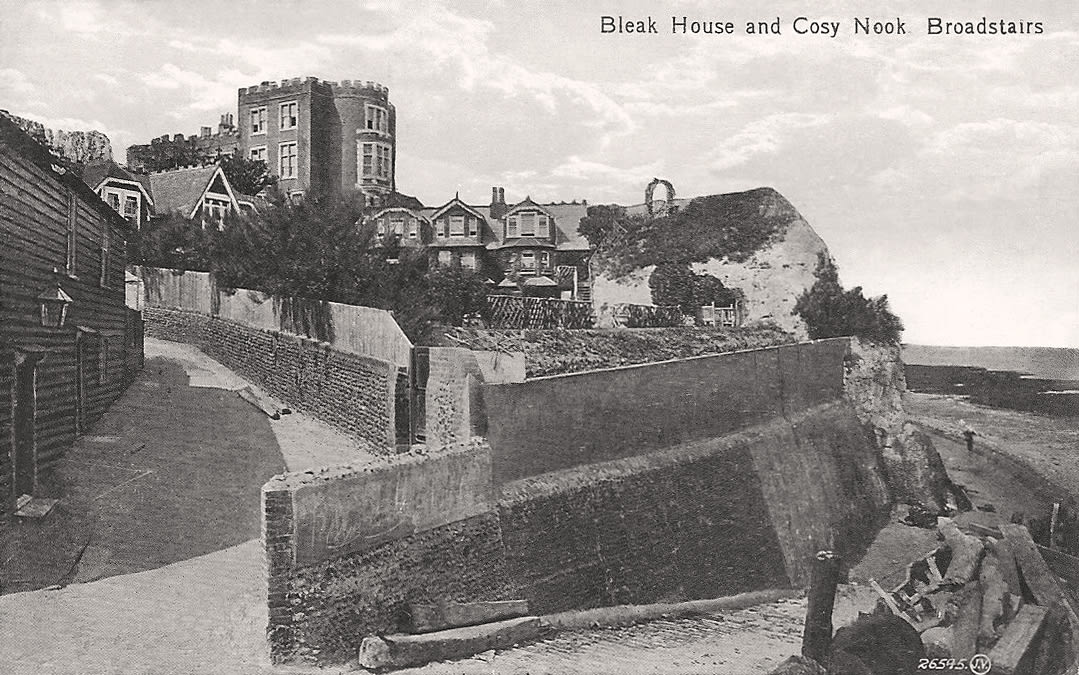
Fort House was the source of considerable confusion both during and after Dickens’s lifetime. Parts of David Copperfield were written here, including the ending. By 1864 it was sometimes informally known as Bleak House, leading many visitors to assume that this novel too had been written in the town.

The Pavilion Hotel in Folkestone is directly referenced in Dickens’s article ‘Out of Town’ in 1855. He also wrote the opening chapters of Little Dorrit in Folkestone.

Dickens spent around 6 years in Chatham. The dockyard would have provided an exciting and at the same time familiar space for the child to explore, in the aftermath of the Napoleonic Wars.